menu
view your basket
0
search
[email protected]
0
item(s)
€0.00
your basket
Search
Register
Login
BOX SETS
Fiction
Pre-order
Staff Choice
The Bookshop Book Club
Tiktok / Booktok books
Holiday Reading
Sci-Fi / Fantasy
Non Fiction
Children
Education
Learn to Read
YA/TEEN
Classics
Cookery
GAMES
Board Games
Jigsaw Puzzles
Puzzle Cubes
Stationery
Cards
Gift Wrapping
Gift Bags
Writing and Colouring products
Book Bags
Register
Login
Home
NON FICTION
Philosophy
Philosophy
Filter results
Display:
List
/
Grid
Show
- items
20
40
60
80
Sort
- sort by
Price (low-high)
Price (high-low)
Title (A-Z)
Title (Z-A)
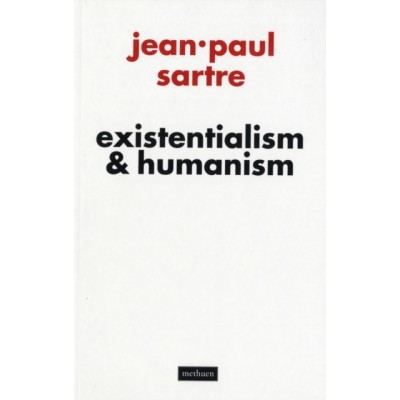
Existentialism and Humanism - Jean-Paul Sartre
€14.90
Over the past sixty years the writings of Jean-Paul Sartre have probably been more influential in the West than those of any other philosopher and literary figure. In his theoretical writings, Sartre laid the foundation for an original doctrine of Existentialism. His concern, however, was to relate his theory to human response and the practical demands of living. To achieve this, he carried his philosophical concepts into his novels and plays, and there subjected them to the test of imagined experience. His uniqueness lies in the success with which he demonstrated the utility of Existentialist doctrine while creating, at the same time, works of the highest literary merit. Thus Sartre became the populariser of his own literary thought. Originally delivered as a lecture in Paris in 1945, "Existentialism and Humanism" is Jean-Paul Sartre's seminal defence of Existentialism as a doctrine true to Humanism, as opposed to a purely nihilistic creed, and a plan for its practical application to everyday human life. This exploration of one of the central tenets of his philosophical thought has become the essential introduction to his work, and a fundamental text for all students of philosophy.
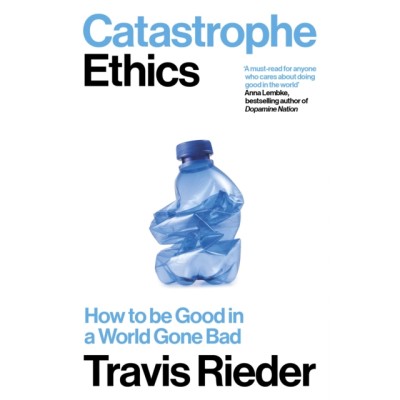
Catastrophe Ethics : How to Be Good in a World Gone Bad - Travis Rieder
€15.50
Philosopher Travis Rieder outlines a new ethics for the age of humanmade catastrophe. We are all asking, in a hyperglobalised world hurtling towards environmental destruction: how do we determine the right actions? Do our individual efforts to avoid plastic or air travel, or to drive electric, make any real difference? We urgently need to expand our ethical toolkit. The mental tools most of us rely on to ‘do the right thing’ just don’t work when it comes to reasoning about large collective problems. From the small stuff like single-use plastics to major decisions like whether to have children, Rieder defines exactly how we can change our thinking and lead a decent, meaningful life in a scary, complicated world.
The Golden Road : How Ancient India Transformed the World - William Dalrymple
€17.90
A revolutionary new history of the diffusion of Indian ideas, from the award-winning, bestselling author and co-host of the chart-topping Empire podcast India is the forgotten heart of the ancient world For a millennium and a half, India was a confident exporter of its diverse civilisation, creating around it a vast empire of ideas. Indian art, religions, technology, astronomy, music, dance, literature, mathematics and mythology blazed a trail across the world, along a Golden Road that stretched from the Red Sea to the Pacific. William Dalrymple draws from a lifetime of scholarship to highlight India's oft-forgotten position as the heart of ancient Eurasia. For the first time, he gives a name to this spread of Indian ideas that transformed the world. From the largest Hindu temple in the world at Angkor Wat to the Buddhism of China, from the trade that helped fund the Roman Empire to the creation of the numerals we use today (including zero), India transformed the culture and technology of its ancient world - and our world today as we know it.
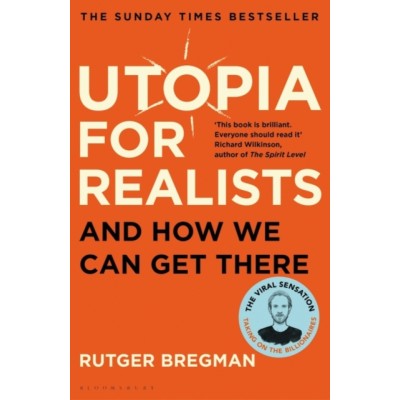
Utopia for Realists : And How We Can Get There - Rutger Bregman
€17.90
THE SUNDAY TIMES BESTSELLER A GUARDIAN, TIMES AND FT SUMMER READ In Utopia for Realists, Rutger Bregman shows that we can construct a society with visionary ideas that are, in fact, wholly implementable. Every milestone of civilisation – from the end of slavery to the beginning of democracy – was once considered a utopian fantasy. New utopian ideas such as universal basic income and a fifteen-hour work week can become reality in our lifetime. From a Canadian city that once completely eradicated poverty, to Richard Nixon's near implementation of a basic income for millions of Americans, Bregman takes us on a journey through history, beyond the traditional left-right divides, as he introduces ideas whose time has come.
The Daily Stoic : 366 Meditations on Wisdom, Perseverance, and the Art of Living: Featuring new translations of Seneca, Epictetus, and Marcus Aurelius - Ryan Holiday
€16.50
THE SUNDAY TIMES BESTSELLER Daily doses of practical, uplifting philosophy from the bestselling author of The Obstacle is the Way. Where can you find joy? What's the true measure of success? How should we manage anger? Find meaning? Conquer grief? The answers to these questions and more lie at the heart of Stoic philosophy. The Daily Stoic is a wise, calming, page-a-day guide to living a good life, offering inspirational daily doses of classic wisdom. Each page features a powerful quotation from the likes of Emperor Marcus Aurelius, the playwright Seneca, or philosopher Epictetus, as well as historical anecdotes and thought-provoking commentary to help you tackle any problem, approach any goal and find the serenity, self-knowledge and resilience you need to live well.
The Myth of Sisyphus - Albert Camus
€11.50
Throughout history, some books have changed the world. They have transformed the way we see ourselves - and each other. They have inspired debate, dissent, war and revolution. They have enlightened, outraged, provoked and comforted. They have enriched lives - and destroyed them. Now Penguin brings you the works of the great thinkers, pioneers, radicals and visionaries whose ideas shook civilization and helped make us who we are. Inspired by the myth of a man condemned to ceaselessly push a rock up a mountain and watch it roll back to the valley below, The Myth of Sisyphus transformed twentieth-century philosophy with its impassioned argument for the value of life in a world without religious meaning.
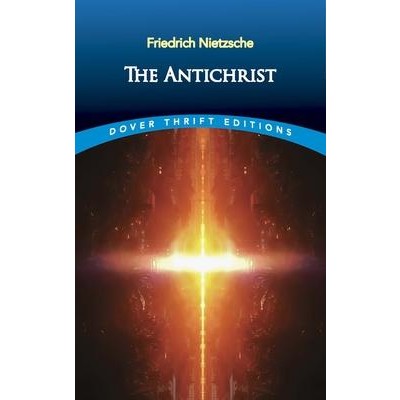
The Antichrist - Friedrich Nietzsche
€5.90
"In truth there was only one Christian, and he died on the cross," declares Friedrich Nietzsche in this famous attack on Christianity and organized religion. A deep exploration and repudiation of Christian symbolism and morality, The Antichrist was the last of Nietzsche's works save for his autobiography, Ecco Homo. As such, it may be regarded as a final statement of some of his most important ideas. This polemic is also one of the philosopher's most conventionally formatted books, consisting of a connected argument with few digressions and a clearly defined beginning, middle, and end. Indeed, it ranks among philosophy's most accessible and easily understood works, consisting of 62 brief chapters. Each chapter features an aphorism that advances the author's arguments against Christian tenets. Fast-paced, concise, and brimming with conviction, Nietzsche's landmark work is essential to a grasp of his complete oeuvre.
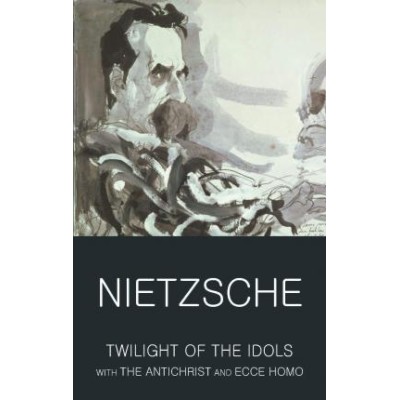
Twilight of the Idols with The Antichrist and Ecce Homo - Friedrich Nietzsche
€8.90
Translated by Antony M. Ludovici. With an Introduction by Ray Furness. The three works in this collection, all dating from Nietzsche's last lucid months, show him at his most stimulating and controversial: the portentous utterances of the prophet (together with the ill-defined figure of the UEbermensch) are forsaken, as wit, exuberance and dazzling insights predominate, forcing the reader to face unpalatable insights and to rethink every commonly accepted 'truth'. Thinking with Nietzsche, in Jaspers' words, means holding one's own against him, and we are indeed refreshed and challenged by the vortex of his thoughts, by concepts which test and probe. In The Twilight of the Idols, The Antichrist, and Ecce Homo Nietzsche writes at breakneck speed of his provenance, his adversaries and his hopes for mankind; the books are largely epigrammatic and aphoristic, allowing this poet-philosopher to bewilder and fascinate us with their strangeness and their daring. He who fights with monsters, Nietzsche once told us, should look to it that he himself does not become one, and when you gaze long into an abyss, the abyss also gazes into you. Reader, beware.
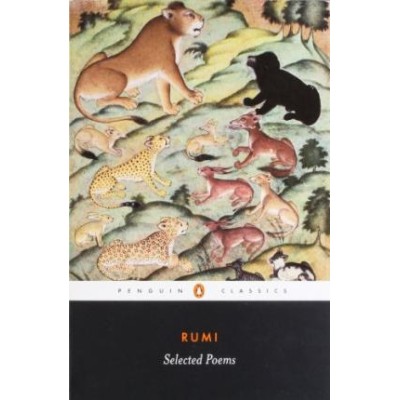
Selected Poems - Rumi, Translated by Coleman Barks
€17.90
The essential poems of the inspirational thirteenth-century Persian philosopher, scholar and mystic The founder of the order of the Whirling Dervishes, Rumi was also a poet of transcendental power. His verse speaks with the universal voice of the human soul and brims with exuberant energy and passion. Rich in natural imagery, from flowers to birds and rivers to stars, the poems have an elemental force that has remained undiminished through the centuries. Their themes - tolerance, goodness, the experience of God, charity and awareness through love - still resonate with millions of readers around the world. Translated by Coleman Barks with John Moyne
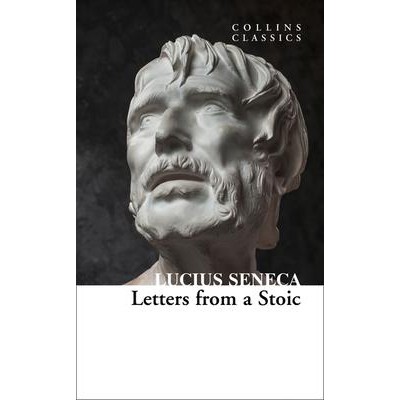
Letters from a Stoic - Lucius Seneca
€4.90
No man can live a happy life, or even a supportable life, without the study of wisdom Lucius Annaeus Seneca (4 BC-AD 65) is one of the most famous Roman philosophers. Instrumental in guiding the Roman Empire under emperor Nero, Seneca influenced him from a young age with his Stoic principles. Later in life, he wrote Epistulae Morales ad Lucilium, or Letters from a Stoic, detailing these principles in full. Seneca's letters read like a diary, or a handbook of philosophical meditations. Often beginning with observations on daily life, the letters focus on many traditional themes of Stoic philosophy, such as the contempt of death, the value of friendship and virtue as the supreme good. Using Gummere's translation from the early twentieth century, this selection of Seneca's letters shows his belief in the austere, ethical ideals of Stoicism - teachings we can still learn from today.
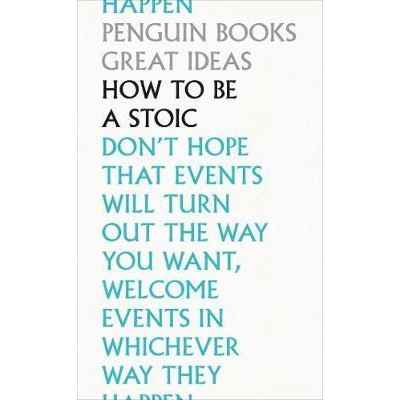
How To Be a Stoic - Epictetus, Seneca, Marcus Aurelius
€11.50
'Don't hope that events will turn out the way you want, welcome events in whichever way they happen' How can we cope when life's events seem beyond our control? These words of consolation and inspiration from the three great Stoic philosophers - Epictetus, Seneca and Marcus Aurelius - offer ancient wisdom on how to face life's adversities and live well in the world. One of twenty new books in the bestselling Penguin Great Ideas series. This new selection showcases a diverse list of thinkers who have helped shape our world today, from anarchists to stoics, feminists to prophets, satirists to Zen Buddhists.
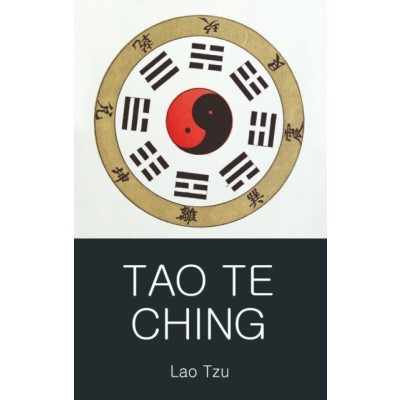
Tao Te Ching - Lao Tzu
€7.90
Translated with Notes by Arthur Waley. With an Introduction by Robert Wilkinson. Dating from around 300BC, Tao Te Ching is the first great classic of the Chinese school of philosophy called Taoism. Within its pages is summed up a complete view of the cosmos and how human beings should respond to it. A profound mystical insight into the nature of things forms the basis for a humane morality and vision of political utopia. The ideas in this work constitute one of the main shaping forces behind Chinese spirituality, art and science, so much so that no understanding of Chinese civilisation is possible without a grasp of Taoism. This edition presents the authoritative translation by Arthur Waley, with a new Introduction reflecting recent developments in the interpretation of the work.
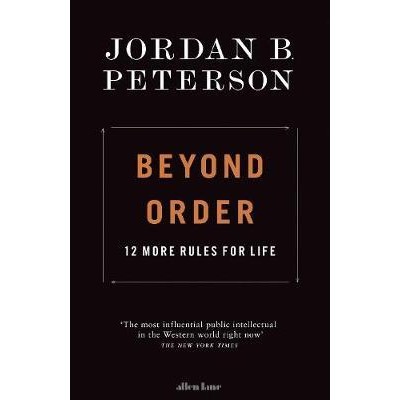
Beyond Order : 12 More Rules for Life - Jordan B Peterson
€15.90
The long-awaited sequel to 12 RULES FOR LIFE, which has sold more than five million copies around the world In 12 Rules for Life, acclaimed public thinker and clinical psychologist Jordan B. Peterson offered an antidote to the chaos in our lives: eternal truths applied to modern anxieties. His insights have helped millions of readers and resonated powerfully around the world. Now in this much-anticipated sequel, Peterson goes further, showing that part of life's meaning comes from reaching out into the domain beyond what we know, and adapting to an ever-transforming world. While an excess of chaos threatens us with uncertainty, an excess of order leads to a lack of curiosity and creative vitality. Beyond Order therefore calls on us to balance the two fundamental principles of reality - order and chaos - and reveals the profound meaning that can be found on the path that divides them. In times of instability and suffering, Peterson reminds us that there are sources of strength on which we can all draw: insights borrowed from psychology, philosophy, and humanity's greatest myths and stories. Drawing on the hard-won truths of ancient wisdom, as well as deeply personal lessons from his own life and clinical practice, Peterson offers twelve new principles to guide readers towards a more courageous, truthful and meaningful life.
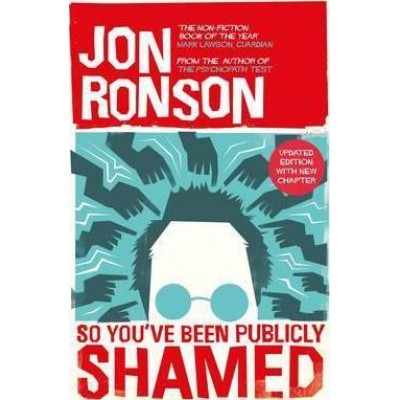
So You've Been Publicly Shamed - Jon Ronson
€15.50
From Jon Ronson, the Sunday Times top ten bestselling author of The Psychopath Test, this is a captivating and brilliant exploration of one of our world's most underappreciated forces: shame. 'It's about the terror, isn't it?' 'The terror of what?' I said. 'The terror of being found out.' For the past three years, Jon Ronson has travelled the world meeting recipients of high-profile public shamings. The shamed are people like us - people who, say, made a joke on social media that came out badly, or made a mistake at work. Once their transgression is revealed, collective outrage circles with the force of a hurricane and the next thing they know they're being torn apart by an angry mob, jeered at, demonized, sometimes even fired from their job. A great renaissance of public shaming is sweeping our land. Justice has been democratized. The silent majority are getting a voice. But what are we doing with our voice? We are mercilessly finding people's faults. We are defining the boundaries of normality by ruining the lives of those outside it. We are using shame as a form of social control. Simultaneously powerful and hilarious in the way only Jon Ronson can be, So You've Been Publicly Shamed is a deeply honest book about modern life, full of eye-opening truths about the escalating war on human flaws - and the very scary part we all play in it.
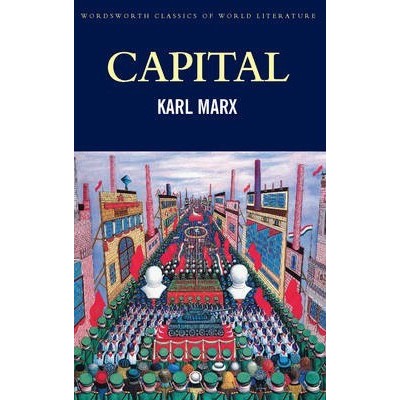
Capital: Volume One and Two - Karl Marx
€7.90
Few writers have had a more demonstrable impact on the development of the modern world than has Karl Marx (1818-1883). Born in Trier into a middle-class Jewish family in 1818, by the time of his death in London in 1883, Marx claimed a growing international reputation. Of central importance then and later was his book Das Kapital, or, as it is known to English readers, simply Capital. Volume One of Capital was published in Paris in 1867. This was the only volume published during Marx's lifetime and the only to have come directly from his pen. Volume Two, published in 1884, was based on notes Marx left, but written by his friend and collaborator, Friedrich Engels (1820-1895). Readers from the nineteenth century to the present have been captivated by the unmistakable power and urgency of this classic of world literature. Marx's critique of the capitalist system is rife with big themes: his theory of 'surplus value', his discussion of the exploitation of the working class, and his forecast of class conflict on a grand scale. Marx wrote with purpose. As he famously put it, 'Philosophers have previously tried to explain the world, our task is to change it.' Format: Paperback | 1168 pages ISBN: 9781840226997
The Nicomachean Ethics - Aristotle
€8.90
Aristotle (384-322BC) is the philosopher who has most influence on the development of western culture, writing on a wide variety of subjects including the natural sciences as well as the more strictly philosophical topics of logic, metaphysics and ethics. To the poet Dante, he was simply 'the master of those who know'. The Ethics contains his views on what makes a good human life. While the work continues to stimulate and challenge modern philosophers, the general course of the argument is easily accessible to the non-specialist. Both as a key influence in the history of ideas and as a work containing unique insights into the human condition, this is a book that simply demands to be read.
Big Ideas for Curious Minds: An Introduction to Philosophy
€30.90
Children are, in many ways, born philosophers. Without prompting, they ask some of the largest questions about time, mortality, happiness and the meaning of it all. Yet too often this inborn curiosity is not developed and, with age, the questions fall away. This is a book designed to harness children's spontaneous philosophical instinct and to develop it through introductions to some of the most vibrant and essential philosophical ideas of history. The book takes us to meet leading figures of philosophy from around the world and from all eras - and shows us how their ideas continue to matter. The book functions as an ideal introduction to philosophy, as well as a charming way to open up conversations between adults and children about the biggest questions we all face.
Republic - Plato
€7.90
Translated by John Llewelyn Davies and David James Vaughan. With an Introduction by Stephen Watt. The ideas of Plato (c429-347BC) have influenced Western philosophers for over two thousand years. Such is his importance that the twentieth-century philosopher A.N. Whitehead described all subsequent developments within the subject as foot-notes to Plato's work. Beyond philosophy, he has exerted a major influence on the development of Western literature, politics and theology. The Republic deals with the great range of Plato's thought, but is particularly concerned with what makes a well-balanced society and individual. It combines argument and myth to advocate a life organized by reason rather than dominated by desires and appetites. Regarded by some as the foundation document of totalitarianism, by others as a call to develop the full potential of humanity, the Republic remains a challenging and intensely exciting work.
Symposium and The Death of Socrates - Plato
€7.90
In Symposium, a group of Athenian aristocrats attend a party and talk about love, until the drunken Alcibiades bursts in and decides to discuss Socrates instead. Symposium gives an unsurpassed picture of the sparkling society that was Athens at the height of her empire. The setting of the other dialogues is more sombre. Socrates is put on trial for impiety, and sentenced to death. Euthyphro discusses the nature of piety, Apology is Socrates' speech in his own defence, Crito explains his refusal to escape punishment, and Phaedo gives an account of Socrates' last day.
The Prince - Niccolo Machiavelli
€7.90
Translated by C.E.Detmold. With an Introduction by Lucille Margaret Kekewich. Written in 1513 for the Medici, following their return to power in Florence, The Prince is a handbook on ruling and the exercise of power. It remains as relevant today as it was in the sixteenth century. Widely quoted in the Press and in academic publications, The Prince has direct relevance to the issues of business and corporate governance confronting global corporations as they enter a new millennium. Much of what Machiavelli wrote has become the common currency of realpolitik, yet still his ideas retain the power to shock and annoy. In the words of Norman Stone, The Prince is 'a manual of man-management that would suit a great many parts of the modern world'. Format: Paperback | 176 pages ISBN: 9781853267758
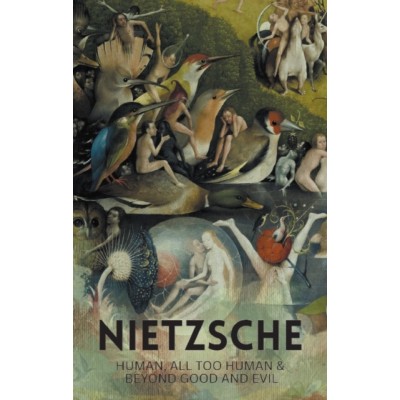
Human, All Too Human and Beyond Good and Evil - Friedrich Nietzsche
€8.90
Human, All Too Human (1878) marks the point where Nietzsche abandons German romanticism for the French Enlightenment. At a moment of crisis in his life (no longer a friend of Richard Wagner, forced to leave academic life through ill health), he sets out his views in a scintillating and bewildering series of aphorisms which contain the seeds of his later philosophy (e.g. the will to power, the need to transcend conventional Christian morality). The result is one of the cornerstones of his life's work. It well deserves its subtitle `A Book for Free Spirits', and its original dedication to Voltaire, whose project of radical enlightenment here finds a new champion. Beyond Good and Evil (1886) is a scathing and powerful critique of philosophy, religion and science. Here Nietzsche presents us with problems and challenges that are as troubling as they are inspiring, while at the same time outlining the virtues, ideas, and practices which will characterise the philosophy of the future. Relentless, energetic, tirelessly probing, he both determines that philosophy's agenda and is himself the embodiment of the type of thought he wants to foster.
1
Showing 1 - 21 of 21 results
Back to top