menu
view your basket
0
search
[email protected]
0
item(s)
€0.00
your basket
Search
Register
Login
BOX SETS
Fiction
Pre-order
Staff Choice
The Bookshop Book Club
Tiktok / Booktok books
Holiday Reading
Sci-Fi / Fantasy
Non Fiction
Children
Education
Learn to Read
YA/TEEN
Classics
Cookery
GAMES
Board Games
Jigsaw Puzzles
Puzzle Cubes
Stationery
Cards
Gift Wrapping
Gift Bags
Writing and Colouring products
Book Bags
Register
Login
Home
Fiction
Dystopian Fiction
Dystopian Fiction
If you can't find what you are looking for,
send us a message
and we can get it for you!
Filter results
Display:
List
/
Grid
Show
- items
20
40
60
80
Sort
- sort by
Price (low-high)
Price (high-low)
Title (A-Z)
Title (Z-A)
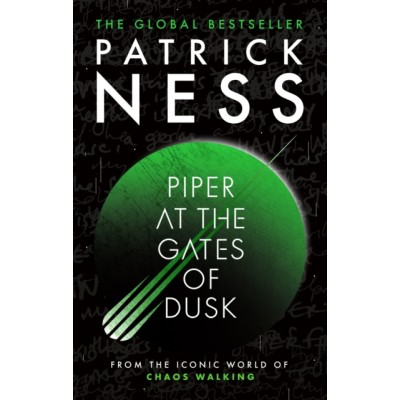
Piper at the Gates of Dusk - Patrick Ness
€20.90
A gripping dystopian tale of bravery and brotherhood for fans of THE HUNGER GAMES and PROJECT HAIL MARY from the author of A Monster Calls In New World, there were no secrets. Everyone could hear everyone else's thoughts in a constant, overwhelming Noise. Then a cure came – one that the second generation took from birth. Peace descended, wars ended, communication was silenced. Until now . . . A sci-fi, dystopian, heart-pounding adventure like no other, by one of the world’s most beloved young-adult writers and author of A Monster Calls. This is a brand-new story set in the world of the multi-award-winning, globally bestselling Chaos Walking series - a compelling read for new and existing fans. Brothers Ben and Max have never really gotten on, each being more like one of their parents – Todd and Viola. But when something is spotted in the night sky - something that’s bringing back dreams of Noise, dreams of terror - the brothers will have to come together. Danger is coming and the family will be tested like never before. For fans of The Hunger Games and action-packed dystopia as well as fantasy worlds such as those by Philip Pullman. An absorbing, deeply human tale of finding common ground in the perpetual struggle to do the next right thing.
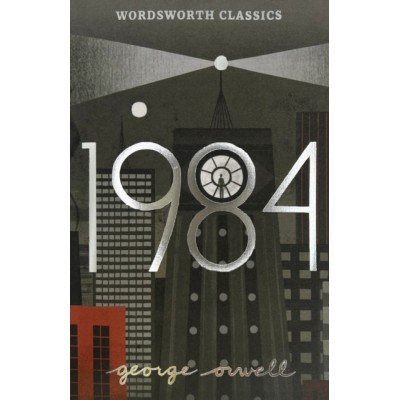
Nineteen Eighty Four (1984) - George Orwell (Wordsworth Classics)
€7.90
The Thought Police, Doublethink, Newspeak, Big Brother – 1984 itself: these terms and concepts have moved from the world of fiction into our everyday lives. They are central to our thinking about freedom and its suppression; yet they were newly created by George Orwell in 1949 as he conjured his dystopian vision of a world where totalitarian power is absolute. In this novel, continuously popular since its first publication, readers can explore the dark and extraordinary world he brought so fully to life. The principal characters who lead us through that world are ordinary human beings like ourselves: Winston Smith and Julia, whose falling in love is also an act of rebellion against the Party. Opposing them are the massed powers of the state, which watches its citizens on all sides through technology now only too familiar to us. No-one is free from surveillance; the past is constantly altered, so that there is no truth except the most recent version; and Big Brother, both loved and feared, controls all. Even the simple act of keeping a diary – as Winston does – is punishable by death. In Winston’s battle to keep his freedom of thought, he has a powerful adversary in O’Brien, who uses fear and pain to enter his very thought processes. Does 2+2 = 4? Or is it 5? We find out in Room 101. Nineteen Eighty-Four was Orwell’s last novel; but the world he created is always with us, as successive generations of readers find within it a mirror for their own times and a warning for the future. Our edition also includes the following selection of Orwell's essays, column extracts and broadcasts
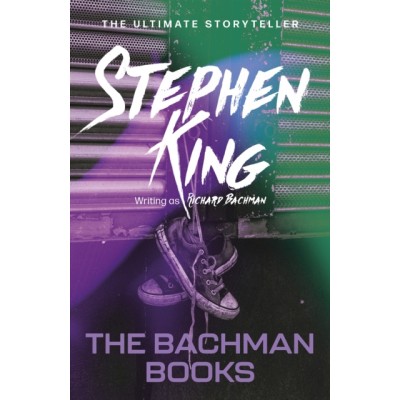
The Bachman Books - Stephen King (writing as Richard Bachman)
€17.90
Includes the story THE LONG WALK . Soon to be a major film from The Hunger Games director Francis Lawrence and starring Mark Hamill (Star Wars), David Jonsson (BAFTA EE Rising Star, Rye Lane), and Cooper Hoffman (Licorice Pizza, Saturday Night Live). For years, readers wrote asking if Richard Bachman was really world-bestselling author Stephen King writing under another name. Now the secret is out - and so, brought together in one volume, are these three spellbinding stories of future shock and suspense. The Long Walk : A chilling look at the ultra-conservative America of the future where a gruelling 450-mile marathon is the ultimate sports competition. Roadwork : An immovable man refuses to surrender to the irresistible force of progress. The Running Man : TV's future-favourite game show, where contestants are hunted to death in the attempt to win a $1 billion jackpot. Publishers Note: Includes The Running Man which is also published as an individual book.
Wool (Silo) - Hugh Howey (Filmed as Silo)
€13.90
NOW THE NO.1 DRAMA IN THE HISTORY OF AppleTV+ In a ruined and hostile landscape, in a future few have been unlucky enough to survive, a community exists in a giant underground silo. Inside, men and women live an enclosed life full of rules and regulations, of secrets and lies. Silo, No.1 drama in the history of Apple TV as of May 2023. To live, you must follow the rules. But some don't. These are the dangerous ones; these are the people who dare to hope and dream, and who infect others with their optimism. Their punishment is simple and deadly. They are allowed outside. Jules is one of these people. She may well be the last.
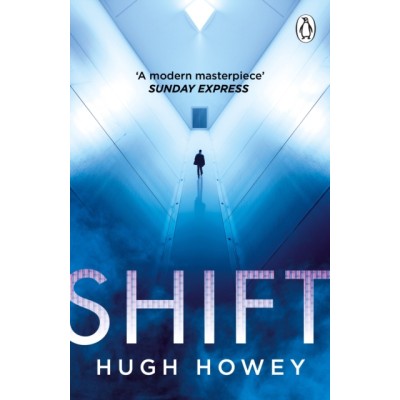
Shift (Wool 2) - Hugh Howey (Filmed as Silo)
€13.90
NOW THE NO.1 DRAMA IN THE HISTORY OF APPLE TV+ The much anticipated prequel to bestseller Wool that takes us back to the beginnings of the silo. In a future less than fifty years away, the world is still as we know it. Time continues to tick by. The truth is that it is ticking away. A powerful few know what lies ahead. They are preparing for it. They are trying to protect us. They are setting us on a path from which we can never return. A path that will lead to destruction; a path that will take us below ground. The history of the silo is about to be written. Our future is about to begin.
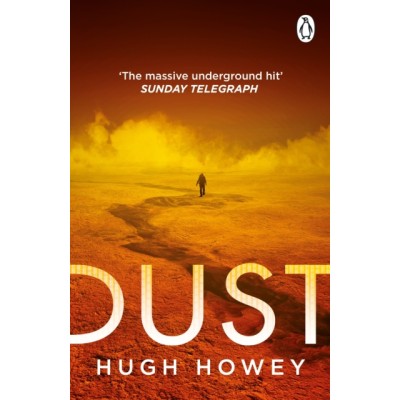
Dust (Wool 3) - Hugh Howey (Filmed as Silo)
€13.90
The much-anticipated final instalment of the Wool trilogy. In the aftermath of the uprising, the people of Silo 18 are coming to terms with a new order. Some embrace the change, others fear the unknown; none have control of their fate. The Silo is still in danger. There are those set on its destruction. Jules knows they must be stopped. The battle has been won. The war is just beginning.
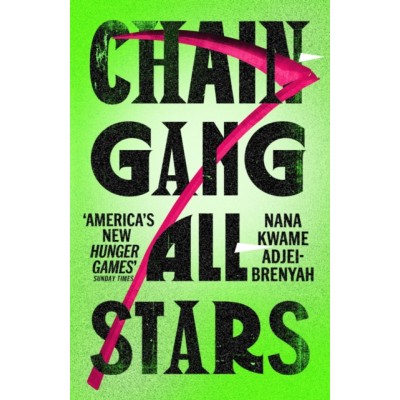
Chain-Gang All-Stars - Nana Kwame Adjei-Brenyah
13.90
€8.90
Squid Game meets The Handmaid's Tale in THE new dystopian novel of summer 2023 She felt their eyes, all those executioners... Enter a world where, watched by millions, prisoners fight like gladiators for the ultimate prize: their freedom. Welcome to Chain-Gang All-Stars, the popular and highly controversial programme inside America's private prison system. In packed arenas, live-streamed by millions, prisoners compete as gladiators for the ultimate prize: their freedom. Fan favourites Loretta Thurwar and Hamara 'Hurricane Staxxx' Stacker are teammates and lovers. Thurwar is nearing the end of her time on the circuit, free in just a few matches, a fact she carries as heavily as her lethal hammer. As she prepares for her final encounters, as protestors gather at the gates, and as the programme's corporate owners stack the odds against her - will the price be simply too high?
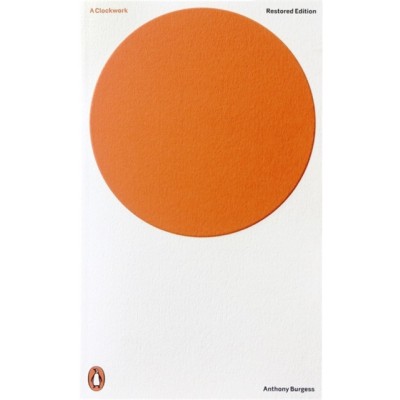
A Clockwork Orange : Restored Edition - Anthony Burgess
€12.90
Fully restored edition of Anthony Burgess' original text of A Clockwork Orange, with a glossary of the teen slang 'Nadsat', explanatory notes, pages from the original typescript, interviews, articles and reviews Edited by Andrew Biswell With a Foreword by Martin Amis 'It is a horrorshow story ...' Fifteen-year-old Alex likes lashings of ultraviolence. He and his gang of friends rob, kill and rape their way through a nightmarish future, until the State puts a stop to his riotous excesses. But what will his re-education mean? A dystopian horror, a black comedy, an exploration of choice, A Clockwork Orange is also a work of exuberant invention which created a new language for its characters. This critical edition restores the text of the novel as Anthony Burgess originally wrote it, and includes a glossary of the teen slang 'Nadsat', explanatory notes, pages from the original typescript, interviews, articles and reviews, shedding light on the enduring fascination of the novel's 'sweet and juicy criminality'. Anthony Burgess was born in Manchester in 1917 and educated at Xaverian College and Manchester University. He spent six years in the British Army before becoming a schoolmaster and colonial education officer in Malaya and Brunei. After the success of his Malayan Trilogy, he became a full-time writer in 1959. His books have been published all over the world, and they include The Complete Enderby, Nothing Like the Sun, Napoleon Symphony, Tremor of Intent, Earthly Powers and A Dead Man in Deptford. Anthony Burgess died in London in 1993. Andrew Biswell is the Professor of Modern Literature at Manchester Metropolitan University and the Director of the International Anthony Burgess Foundation. His publications include a biography, The Real Life of Anthony Burgess, which won the Portico Prize in 2006. He is currently editing the letters and short stories of Anthony Burgess.
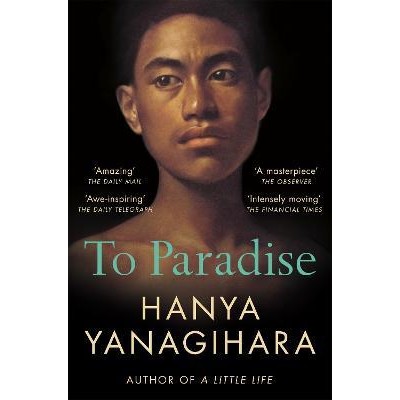
To Paradise - Hanya Yanagihara
€15.90
From the author of the modern classic A Little Life, a bold, brilliant novel spanning three centuries and three different versions of the American experiment, about lovers, family, loss and the elusive promise of utopia. In an alternate version of 1893 America, New York is part of the Free States, where people may live and love whomever they please (or so it seems). The fragile young scion of a distinguished family resists betrothal to a worthy suitor, drawn to a charming music teacher of no means. In a 1993 Manhattan besieged by the AIDS epidemic, a young Hawaiian man lives with his much older, wealthier partner, hiding his troubled childhood and the fate of his father. And in 2093, in a world riven by plagues and governed by totalitarian rule, a powerful scientist's damaged granddaughter tries to navigate life without him - and solve the mystery of her husband's disappearances. These three sections are joined in an enthralling and ingenious symphony, as recurring notes and themes deepen and enrich one another: A townhouse in Washington Square Park in Greenwich Village; illness, and treatments that come at a terrible cost; wealth and squalor; the weak and the strong; race; the definition of family, and of nationhood; the dangerous righteousness of the powerful, and of revolutionaries; the longing to find a place in an earthly paradise, and the gradual realization that it can't exist. What unites not just the characters, but these Americas, are their reckonings with the qualities that make us human: Fear. Love. Shame. Need. Loneliness. To Paradise is a fin-de-siecle novel of marvellous literary effect, but above all it is a work of emotional genius. The great power of this remarkable novel is driven by Yanagihara's understanding of the aching desire to protect those we love - partners, lovers, children, friends, family and even our fellow citizens - and the pain that ensues when we cannot.
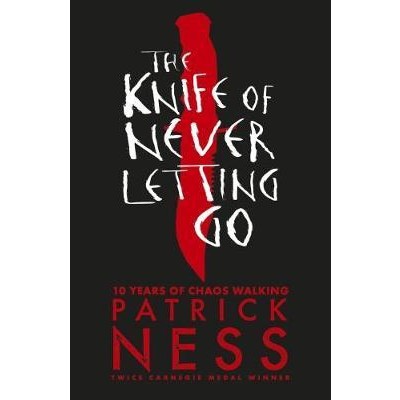
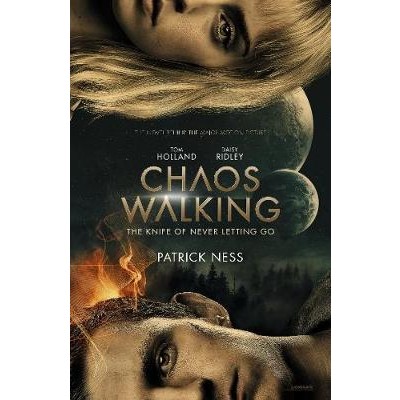
The Knife of Never Letting Go (Chaos Walking 1) - Patrick Ness
€12.90
The multi-award-winning novel by Patrick Ness, the first in a gripping trilogy, is now a major motion picture starring Tom Holland and Daisy Ridley. Todd Hewitt lives in a town unlike other towns. There are no women, and everyone can hear everyone else's thoughts in an overwhelming, never-ending stream of Noise. But then Todd meets someone who should not exist: a girl. Even in a town where privacy is impossible, there is a secret so terrible, they're going to have to run for their lives. But how do you escape when your pursuers can hear your every thought?
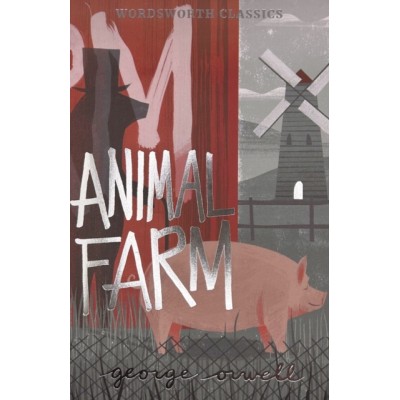
Animal Farm - George Orwell (Wordsworth Classics)
€7.90
'All animals are equal but some animals are more equal than others' In 1943, there was an urgent need for Animal Farm. The Soviet Union had become Britain's ally in the war against Nazi Germany, and criticism of Stalin's brutal regime was either censored or discouraged. In any case, many intellectuals on the left still celebrated the Soviet Union, claiming that the terrors of its show trials, summary executions and secret police were either exaggerated or necessary. But, to Orwell, Stalin was always a "disgusting murderer" and he wanted to remind people of this fact in a powerful and memorable way. But how to do it? A political essay would never reach a wide enough audience; a traditional novel would take too long to write. Orwell hit on the inspired idea of combining the moralism of the traditional 'beast fable' with the satire of Gulliver's Travels. A group of farmyard animals, led by the pigs, overthrow their human masters. Their revolution is inspired by high ideals: the farm will be run in the interests of its animals with no more slaughtering, plenty of food for all and comfort in retirement. But when Napoleon the pig takes command, he quickly corrupts their principles, creating a new tyranny worse than the old. Orwell wrote Animal Farm in the middle of the Second World War, but at first no publishers wanted to touch it. It was finally published in August 1945, once the war was over. This little book quickly became a seminal text in the emerging 'cold war' (a phrase that Orwell himself coined). It also became a site of that conflict itself, suffering various attempts to subvert or change its meaning. Today, Animal Farm remains a powerful fable about the nature of tyranny and corruption which applies for all ages. Our edition also includes the following essays: Shooting an Elephant; Charles Dickens; Inside the Whale; The Frontiers of Art and Propaganda; Literature and Totalitarianism; Fascism and Democracy; Patriots and Revolutionaries; Catastrophic Gradualism; Some Thoughts on the Common Toad; Why I Write; Writers and Leviathan Format: Paperback | 256 pages ISBN: 9781840228038
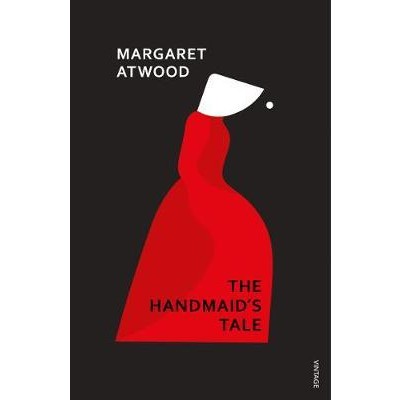
The Handmaid's Tale - Margaret Atwood
€12.90
NOW AN AWARD-WINNING TV SERIES STARRING ELISABETH MOSS Offred is a Handmaid in The Republic of Gilead, a religious totalitarian state in what was formerly known as the United States. She is placed in the household of The Commander, Fred Waterford - her assigned name, Offred, means `of Fred'. She has only one function: to breed. If Offred refuses to enter into sexual servitude to repopulate a devastated world, she will be hanged. Yet even a repressive state cannot eradicate hope and desire. As she recalls her pre-revolution life in flashbacks, Offred must navigate through the terrifying landscape of torture and persecution in the present day, and between two men upon which her future hangs. Masterfully conceived and executed, this haunting vision of the future places Margaret Atwood at the forefront of dystopian fiction.
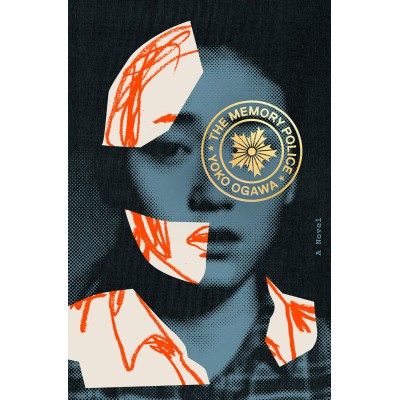
The Memory Police - Yoko Ogawa
€13.90
A compelling speculative mystery by one of Japan's greatest writers. Hat, ribbon, bird, rose. To the people on the island, a disappeared thing no longer has any meaning. It can be burned in the garden, thrown in the river or handed over to the Memory Police. Soon enough, the island forgets it ever existed. When a young novelist discovers that her editor is in danger of being taken away by the Memory Police, she desperately wants to save him. For some reason, he doesn't forget, and it's becoming increasingly difficult for him to hide his memories. Who knows what will vanish next? The Memory Police is a beautiful, haunting and provocative fable about the power of memory and the trauma of loss, from one of Japan's greatest writers. 'One of Japan's most acclaimed authors explores truth, state surveillance and individual autonomy. Echoes 1984, Fahrenheit 451, and 100 Years of Solitude, but it has a voice and power all its own' Time Magazine **SHORTLISTED FOR THE NATIONAL BOOK AWARD FOR TRANSLATED LITERATURE**
1
Showing 1 - 13 of 13 results
Back to top